
🟪प्रसादम् Prasad (Sacred Offering)
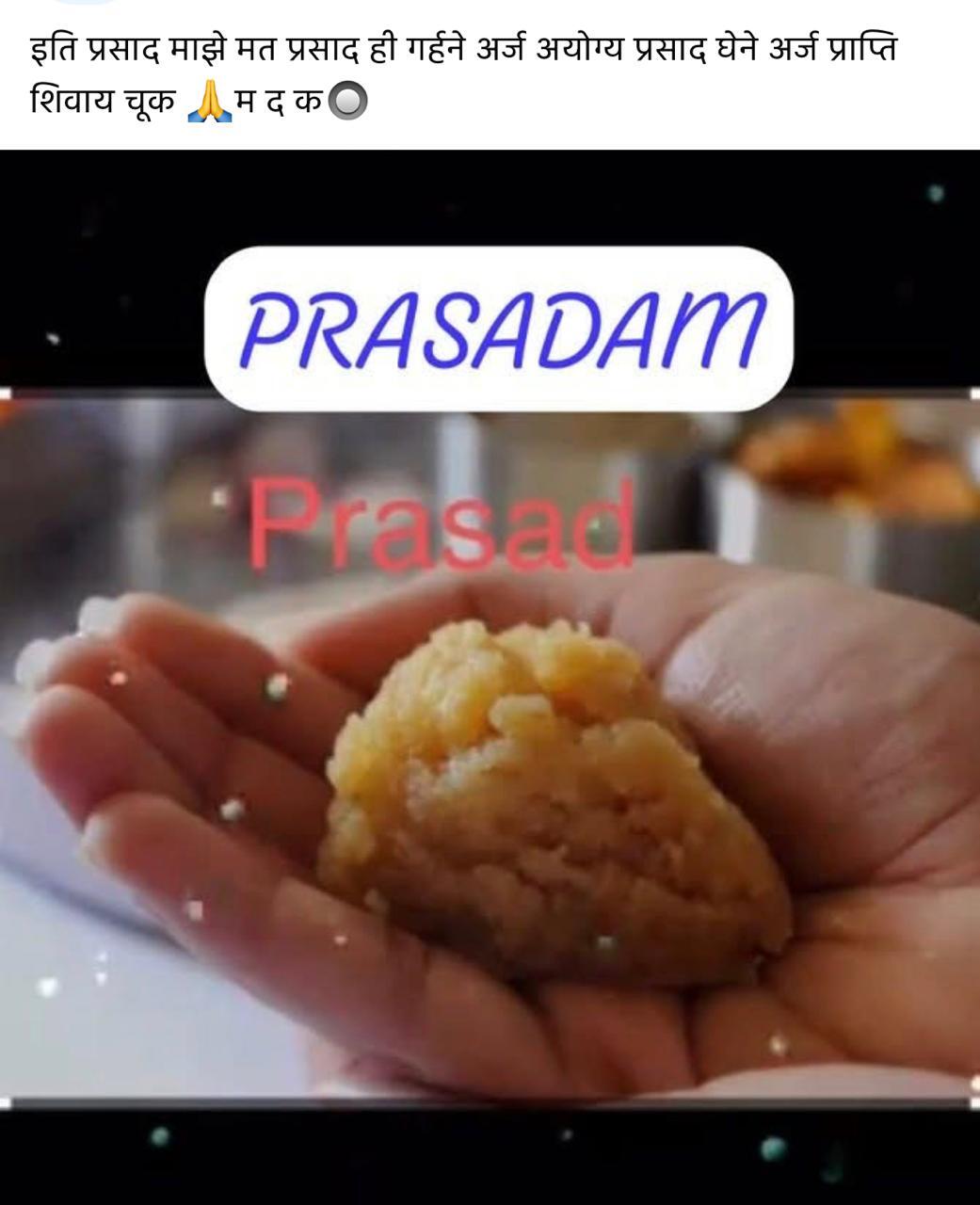
🟪 Prasad (Sacred Offering) 🟪
Prasad offered to God refers to food or items that are properly prepared or purchased and then ritually offered to the deity by the temple, priest, or management. Only such prasad is considered appropriate to receive.
If we make a request or prayer to God, it is believed that offering prasad through proper rituals is necessary for the wish to be fulfilled. Otherwise, the importance of the request may diminish or it may even be rejected.
Therefore, prasad that is prepared and offered by the temple itself through proper rituals is considered truly belonging to God.
However, in many places, the same prasad given by devotees is returned to them (this is not accepted in higher-level temples).
Think about it—if an unknown person brings something, we don’t know what or how it was prepared.
“I am eating the same prasad that I myself offered to God” — this is not considered appropriate.
It is like lovingly giving something to someone, and they return the same thing back to you.
Similarly, consuming something that was given by someone else to God is also considered inappropriate.
Types of Prasad:
Bhog Prasad – Food that is offered to God.
Body-contact Prasad – Items like Panchamrit, sacred water, vermilion (sindoor), kumkum, etc., that are directly applied to the deity (idol in the temple). This is considered the most authentic and pure form of prasad.
Flowers, incense, clothes, etc., are not considered prasad in the same sense. They are offerings in which devotees symbolically surrender negativity at the feet of God, so taking them back is not appropriate.
Temple food distribution (annadan) and prasad are different.
Annadan (charitable food distribution) is meant for the poor and needy, often in the form of langar or food shelters.
If one is capable and self-sufficient, donating goods is considered more appropriate than partaking in such free meals.
It is also believed that going to such places and eating at one’s own expense is not ideal.
More beneficial than receiving prasad is engaging in remembrance of God, meditation, chanting, and acts of charity like annadan.
In South Indian temples (for example, Tirupati laddus), all prasad is prepared within the temple itself. Devotees may contribute money or ingredients, but the temple prepares and distributes the prasad through proper rituals.
In home rituals, prasad is considered appropriate only if it is prepared by the person performing the पूजा with their own effort and expense. Simply distributing items brought from elsewhere as “prasad” is not appropriate.
Homemade prasad is generally considered proper because it is prepared by oneself.
In major rituals like Satyanarayan puja, Vastu shanti, Chandi havan, and Guru worship, it is believed that planetary peace (Navagraha shanti) is also achieved.
Satyanarayan sheera and Panchamrit are considered among the best forms of prasad, as they are associated with worship of deities, planetary forces, and family deities.
Taking back garlands or flowers offered to God and placing them on vehicles is not considered appropriate.
Only those garlands and flowers that have remained with the deity for several hours (or overnight) and have been sanctified by divine contact are believed to carry spiritual energy.
There is a significant difference between God/Guru and material objects like vehicles.
Therefore, placing a garland offered to God onto a vehicle is considered inappropriate.
🙏 Conclusion (personal belief expressed):
Prasad should be properly offered and received. Taking or giving prasad without proper ritual, or consuming it without spiritual merit or fulfillment of intent, is considered incorrect.